Shorebirds
Piping Plover
A small shorebird with a big story
The Piping Plover may be small, but it plays an important role in beach conservation. Known for its pale coloring and gentle movements, this bird nests directly on open sand, making it especially vulnerable to disturbance.
How to Identify a Piping Plover
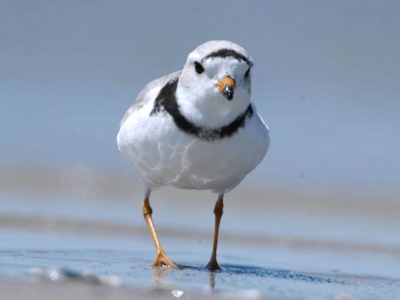
Piping plovers are small, pale shorebirds with sandy-colored backs, white undersides, and a short bill with a dark tip. During breeding season, they develop a thin black band across the neck and a dark patch on the forehead.
Their soft coloring helps them blend in almost perfectly with beach sand.
Where You’ll See Them
Piping plovers favor **wide, open sandy beaches**, often near dunes or sparsely vegetated areas. Nesting sites are typically roped off during breeding season to protect eggs and chicks.
What They Eat
They forage along the shoreline for:
* Marine worms
* Small crustaceans
* Insects
They use a “run and pause” feeding style similar to other small plovers.
When to Spot Them
Piping plovers are **seasonal residents**, with nesting season typically occurring in late spring and summer. Outside of breeding season, they migrate to warmer coastal areas.
Why They’re Protected
Piping plovers are federally protected due to habitat loss and disturbance. Beach closures and fenced nesting areas are critical to their survival.
Beach Etiquette Tip
If you see roped-off areas or signs, please respect them. Keeping dogs leashed and giving these birds space helps protect vulnerable nests and chicks.
Related Shorebirds
* Semipalmated Plover
* Least Tern
* Killdeer