Shorebirds
Sanderling
The little shorebird that chases the waves
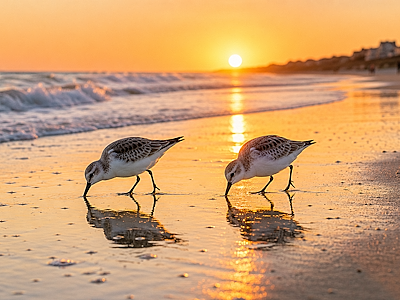
If you’ve ever watched a small flock of birds sprint toward the surf, then scatter just in time as the waves roll in, you’ve probably met the sanderling. These energetic shorebirds are a familiar sight on beaches around the world and one of the easiest shorebirds for casual beachgoers to recognize.
How to Identify a Sanderling
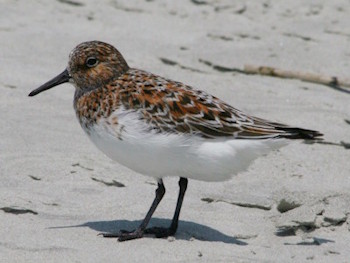
Sanderlings are small, pale shorebirds with short black legs and a straight, dark bill. In non-breeding season, they appear mostly white and light gray, giving them a bright, clean look against wet sand. During breeding season, they develop rusty and reddish markings on the head and back.
They’re often seen in groups, running quickly along the shoreline in near-constant motion.
Where You’ll See Them
Sanderlings prefer open sandy beaches, especially near the water’s edge. They stay close to breaking waves, where food is constantly uncovered by retreating surf.
You’ll rarely see a sanderling standing still for long — they are almost always moving.
What They Eat
As waves pull back, sanderlings dart in to feed on:
* Small crustaceans
* Marine worms
* Tiny clams and insects
This feeding style creates their signature “run-stop-peck-run” behavior.
When to Spot Them
Sanderlings are seasonal visitors in many areas, often appearing during fall and winter. Some beaches may host them year-round during migration periods.
Fun Facts
* Sanderlings migrate thousands of miles each year.
* They often travel in synchronized flocks.
* Their behavior makes them one of the most photographed shorebirds.
Beach Etiquette Tip
Because sanderlings feed right at the water’s edge, they’re easily disturbed by fast-moving people and pets. Giving them space helps conserve their energy during migration.
Related Shorebirds
* Dunlin
* Semipalmated Plover
* Black-bellied Plover