Shorebirds
How to Photograph Shorebirds Without Scaring Them Away
There’s something so irresistible about trying to photograph shorebirds. Maybe it’s the way they zigzag along the water’s edge, or how they seem to pose perfectly one moment and then vanish the next.
Shorebird photography is one of the most satisfying ways to enjoy time at the beach. And the best part is that you don’t need fancy gear or expert skills to get great shots. You just need a little patience.
The biggest challenge isn’t getting the perfect shot. It’s getting close enough without causing the birds to fly away.
Start With What You Have
A lot of people think they need expensive gear to photograph birds, but that’s not true at all. Today’s smartphones can capture surprisingly crisp images, especially in good light. If you do have a camera with a zoom lens, that’s great, but it’s not required.
You might be surprised how many great wildlife shots these days are taken with phones. It’s really all about being in the right place at the right time.
What matters more is the light, good timing, your position, and your patience. If you can master those four things, your photos will instantly improve.
Early Light Makes a Difference
Shorebirds look their best in the soft, warm light of early morning or late afternoon. This “golden hour” makes their feathers glow, reduces harsh shadows, and gives your photos that dreamy, beach postcard feel.
This kind of lighting makes your photos look better without much extra effort.
Plus, these are the times when shorebirds are most active – making it a win?win for photographers.
Be at the Right Level
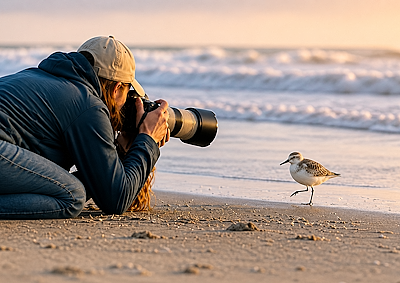
If there’s one tip that will instantly transform your photos, it’s this: get down to the bird’s eye level.
Instead of shooting from above, crouch, kneel, or even lie down in the sand. Shooting at eye level with the bird creates more engaging and natural images.
People might look at you funny. But the photos will be totally worth it!
Let the Birds Come to You
First and most important, chasing birds rarely works. They’re faster, lighter, and much better at dodging us than we are at catching them. Instead, find a good spot, settle in, and let the birds move naturally around you.
Try this approach: Sit or kneel near the waterline. Stay still for a minute or two. Then watch as the birds slowly begin to ignore you. Sometimes they’ll even start working their way back along the shoreline right toward you. Once they realize you’re not a threat to them, they’ll wander even closer, giving you better shots than you’d ever get by following them.
Use the Environment
Some of the best shorebird photos aren’t close?ups. They’re wide shots that show the bird in its own environment. Picture a lone sandpiper against a glowing sunset, a flock silhouetted against the surf, or a bird reflected in a tide pool.
These images tell a story, and they’re often easier for beginners because you don’t need extreme zoom lenses or run the risk of scaring them away.
Check the Tide
Low tide exposes feeding areas and creates beautiful wet sand reflections. High tide pushes birds closer to the upper beach, sometimes concentrating them into smaller areas. This may make them easier to photograph without disturbing them.
If you want the best variety of shots, check the tide chart before you go. Even knowing whether it’s incoming or outgoing can help you plan. It’s a small step that can make a big difference.
Respect the Birds
Good photography should never come at the cost of disturbing wildlife. If a bird starts to move away or stops feeding, or looks nervous, then you’re too close.
During nesting season, some shorebirds are especially sensitive, so it’s best to give them extra space and avoid marked nesting areas.
Give them space, move slowly, and remember that the beach is their home. Backing off slightly often helps the bird relax, and will give you a better chance for natural-looking photos.
Experiment and Have Fun
Try different angles. Play with reflections. Capture footprints in the sand. Photograph flocks, individuals, silhouettes, and close?ups. There’s no wrong way to explore shorebird photography — every outing teaches you something new.
And don’t delete "bad" photos too quickly. Sometimes the blurry ones show motion beautifully, and sometimes a shot you thought was a dud reveals a hidden gem when you look at it later.
Shorebird photography isn’t about perfection. It’s about slowing down, paying attention, and seeing the beach in a new way. Every wave, every patch of sand, every little bird scurrying along the shoreline becomes a moment worth capturing.
And once you start noticing those moments, even a simple beach walk feels different.
Remember, the best photos don’t just show the bird. They capture a moment of natural behavior. And that only happens when the bird feels at ease.