Shorebirds
The Best Time of Day to Spot Shorebirds: Morning or Evening?
If you’ve ever taken a slow walk along the shoreline and noticed how the beach seems to “wake up” at certain times of day, you’re not imagining it. Shorebirds follow their own daily rhythm, a mix of instinct, feeding needs, tides, and even a few personality quirks. Whether you’re a brand?new birdwatcher or someone who simply enjoys watching little legs scurry across the sand, knowing when shorebirds are most active can turn an ordinary beach visit into something special.
The Beach at Sunrise: Breakfast Time for Birds
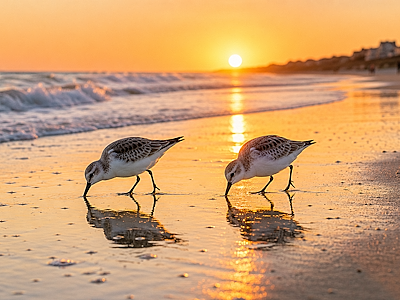
Early morning is one of the best times to see shorebirds in action. As the sun rises, the sand warms from the night air, the beach is quiet, and the tide often reveals fresh feeding spots. Many species - like sandpipers, plovers, and oystercatchers - take advantage of this peaceful window to grab their first meal of the day.
Overnight, tiny creatures like sand fleas, worms, and small crustaceans move closer to the surface. When the first light hits, shorebirds are ready to probe, peck, and pluck their way through breakfast.
Early in the morning you’ll often see: small shorebirds darting along the water’s edge, groups feeding together in the wet sand, and more relaxed, natural behavior overall.
The lighting is also softer, which makes it a great time for photography.
The Midday Slowdown
By late morning and into the early afternoon, activity often slows down. The sun is higher, the sand is hotter, and the beach is busier. Shorebirds tend to be less active in the heat. Their legs help release body warmth, but there’s only so much they can do. Many species rest, preen, or tuck themselves into small groups during the hottest hours.
If you do see activity midday, it’s usually: birds bathing in shallow water, gulls and terns soaring overhead, and a few determined foragers working the wet sand.
But overall, this is the quietest time of the day for bird activity.
Some shorebirds stand on one leg not because they’re tired, but to reduce heat loss or heat gain. For them, it’s a simple way to regulate their body temperature.
Evening: The Second Rush Hour
As the sun begins to drop, the beach cools again and shorebirds perk right back up. Evening is often just as lively as morning, especially if the tide is right. Birds that rested through the heat now return to feeding, socializing, and sometimes squabbling over the best patches of sand.
Evening is also when you’ll hear more vocalizations - soft peeps, whistles, and calls that help birds stay connected as they forage.
The Tide Matters More Than the Clock
Here’s a secret experienced birders swear by: shorebirds follow the tide more than the time of day.
Low tide exposes mudflats, sandbars, and feeding zones. High tide pushes birds closer to the upper beach, where they rest or gather in flocks. If you want the best action, check the tide chart before you go.
Here’s a fun fact: some species, like sanderlings, chase waves with perfect timing - running forward as the water retreats, then sprinting back as it returns. They can do this for hours without missing a beat.
Weather Plays a Role Too
Cooler, overcast mornings can stretch out activity longer. Breezy evenings can make birds more active as they take advantage of comfortable temperatures. After storms, beaches can be especially lively, with waves churning up fresh food and birds taking full advantage.
The beach is never the same twice, and neither are the birds. Whether you’re out at sunrise with a cup of coffee or strolling at sunset, shorebirds offer a front?row seat to one of nature’s simplest and most beautiful daily routines.
So, morning or evening? The honest answer is both, just for different reasons. Mornings tend to have the most feeding activity, while evenings feel a little calmer and more relaxed.
But really, the best time to watch shorebirds is anytime you’re on the beach and paying attention.