Shorebirds
Ruddy Turnstone
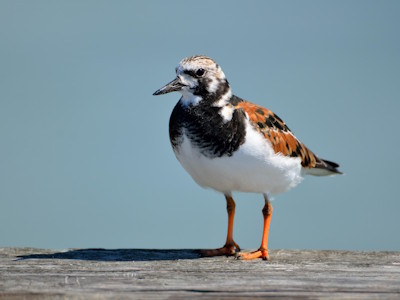
The shorebird that flips the beach over
The ruddy turnstone is one of the most entertaining shorebirds you’ll spot along the coast. True to its name, this sturdy little bird is often seen flipping over stones, shells, and seaweed in search of food, making it easy to recognize once you know what to look for.
How to Identify a Ruddy Turnstone
Ruddy turnstones are compact shorebirds with short legs and a slightly upturned bill. In breeding season, they show bold black, white, and rusty-orange patterns. Outside of breeding season, their colors are more muted but still noticeably patterned compared to many other shorebirds.
They often appear chunky and purposeful as they move across the beach.
Where You’ll See Them
Turnstones prefer rocky shorelines, jetties, and beaches with shells or debris they can flip over. They’re commonly seen near tide lines and sometimes mingle with gulls and other shorebirds.
What They Eat
Ruddy turnstones are opportunistic feeders. Their diet includes:
* Small crustaceans
* Insects
* Mollusks
* Leftover marine life exposed by tides
Their habit of flipping objects gives them access to food other birds miss.
When to Spot Them
Turnstones are typically seasonal visitors, most often seen during fall, winter, and spring migration periods.
Fun Facts
* Ruddy turnstones are long-distance migrants.
* They sometimes work together, flipping debris in groups.
* Their bold behavior makes them easier to spot than many similarly sized shorebirds.
Beach Etiquette Tip
Although turnstones are less likely to nest directly on open sand, they still benefit from space and minimal disturbance while feeding.
Related Shorebirds
* Sanderling
* Black-bellied Plover
* Dunlin